

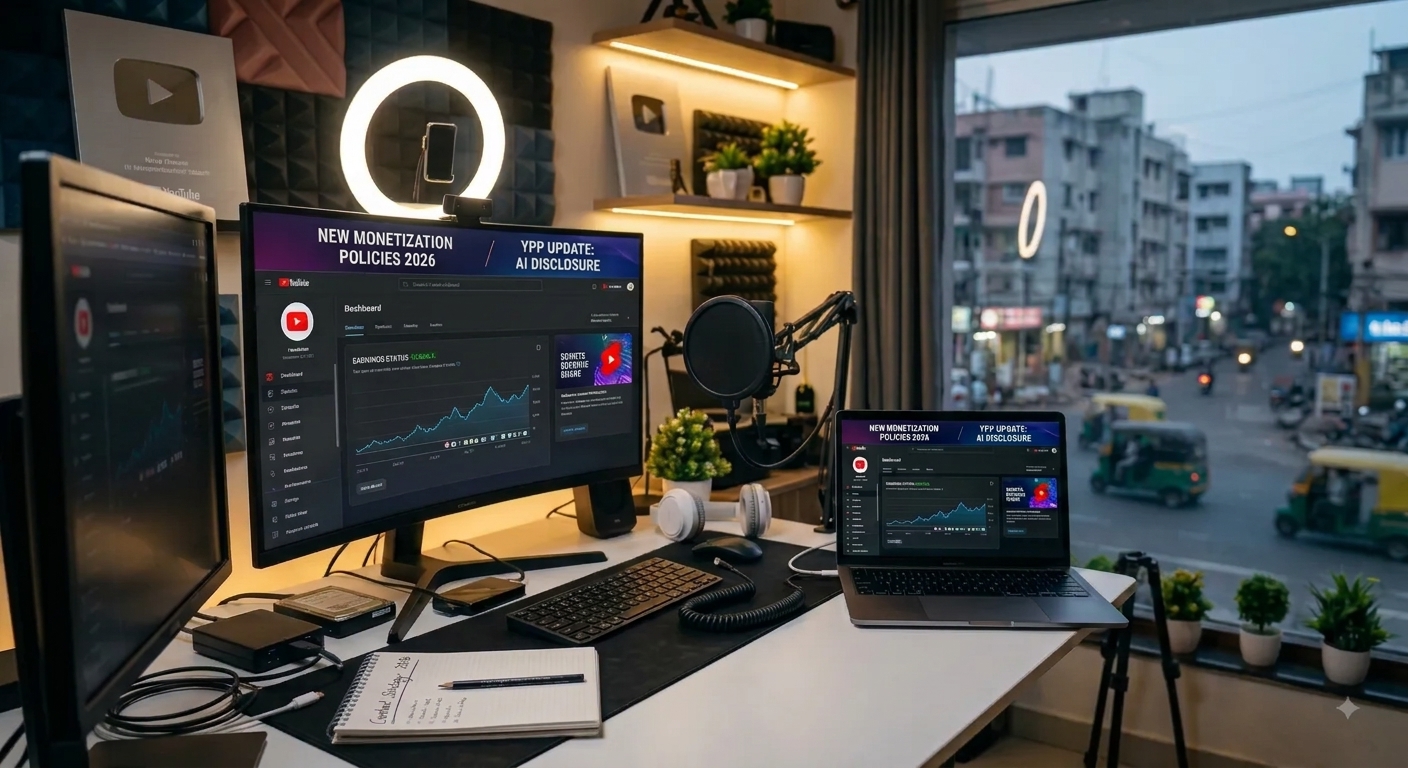
Digital content creation across Africa has shifted from a side hustle into a major economic driver. But for creators operating out of markets like Nigeria, Kenya, South Africa, and Ghana, building a profitable channel requires navigating distinct monetization mechanics, geographic ad tier gaps, and strict payout thresholds.
While top global creators generate tens of thousands of dollars monthly through ad revenues, African channels often face a stark reality. A video getting 100,000 views from local audiences can yield a fraction of the income generated by the same view count in Western markets.
Understanding how Google measures value, calculates ad rates, and processes bank distributions is essential for any creator looking to turn watch time into sustainable revenue.
What Is the YouTube Partner Program and How Do You Qualify?
The YouTube Partner Program serves as the main gateway for creators to monetize their video content via Google AdSense. YouTube maintains two distinct qualification tiers designed to grant creators early access to audience funding before unlocking full advertising revenue shares.
The early access tier opens basic fan funding features, including Super Thanks, channel memberships, and YouTube Shopping links. To reach this initial level, creators must hit 500 subscribers, upload three public videos in the past 90 days, and accumulate either 3,000 valid public watch hours on long-form content over a rolling 12 months or 3 million public Shorts views within 90 days.
Full monetization — which unlocks revenue sharing on long-form video ads and Shorts feed advertisements — requires clearing higher operational thresholds. Creators must reach 1,000 subscribers and secure either 4,000 public watch hours over 12 months or 10 million public Shorts views over 90 days.
Beyond numerical benchmarks, channel security and policy compliance dictate approval. Channels must have two-step verification active on their primary Google account, maintain zero active Community Guidelines strikes, and link an authorized Google AdSense account. Reused content, automated AI-generated voiceovers paired with stock footage, and unoriginal compilations trigger swift rejections during manual channel reviews.
Understanding CPM vs. RPM: The Metrics That Dictate Earnings
Creators frequently confuse Cost Per Mille (CPM) with Revenue Per Mille (RPM). But the distinction between these two metrics determines the actual cash value of a channel’s views.
CPM represents the total price advertisers pay Google to serve 1,000 ad impressions on a video. It reflects advertiser demand, audience demographics, season, and content niche.
RPM represents the exact earnings a creator keeps per 1,000 total video views after YouTube takes its platform cut. On standard long-form videos, YouTube retains 45% of gross ad revenue, while the creator receives 55%.
If a channel logs a $10 CPM on a video, YouTube collects $4.50, leaving the creator with a baseline of $5.50. However, because not every video view serves an advertisement due to ad-blockers or limited ad inventory, a creator’s final RPM is almost always lower than their gross CPM.
Shorts revenue sharing operates on a separate pool model. YouTube aggregates total ad revenue from the global Shorts feed, deducts music licensing fees, and allocates 45% of the remaining pool to creators based on their overall share of total Shorts views.
CPM Benchmarks for African Audiences vs. Global Audiences
Geography remains the single largest factor influencing a channel’s earnings. Google’s ad engine charges advertisers based on the geographic location of the person watching the video, not where the creator sits.






Comments0
Sign in to join the conversation
Share your perspectives and engage with other readers.