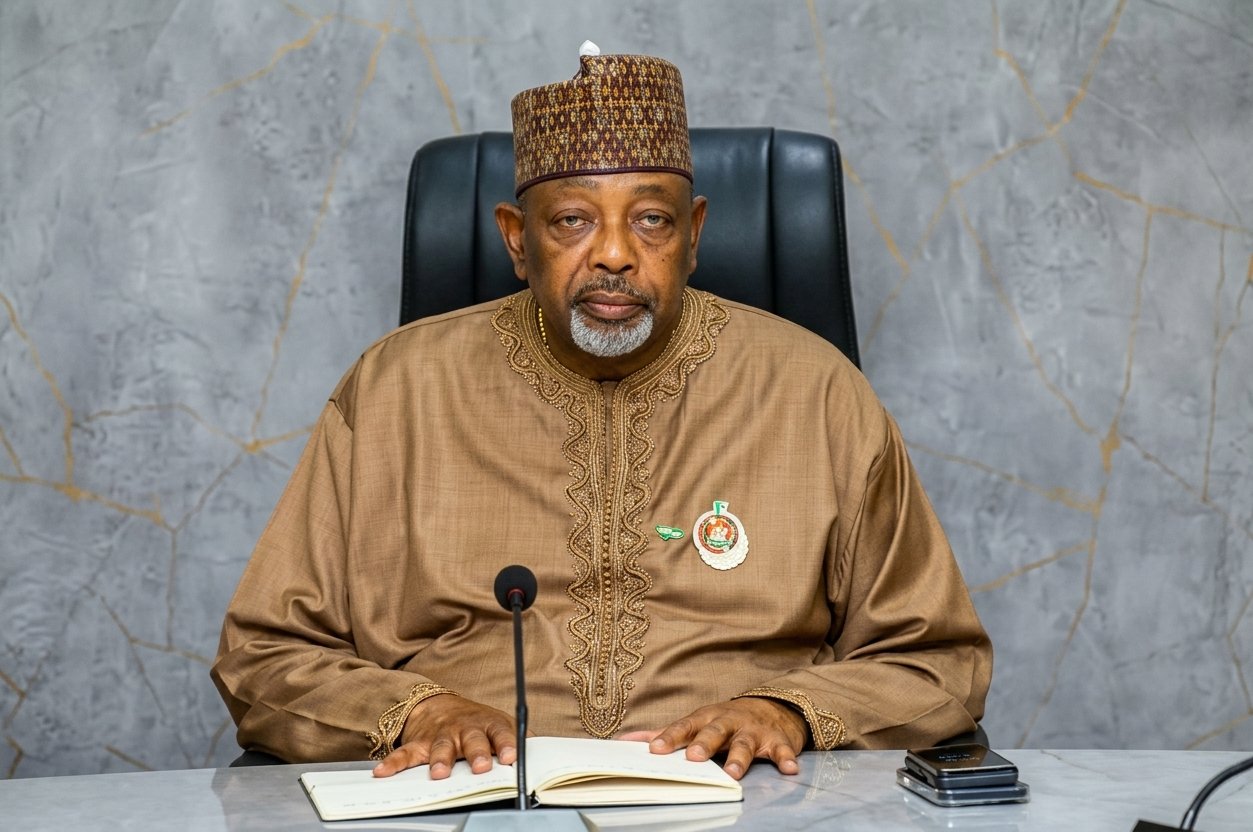
ABUJA — The Federal Government unveiled its flagship National Agricultural Mechanization Policy and National Agricultural Mechanization Investment Strategy, laying out plans to build a domestic tractor assembly plant capable of churning out up to 4,000 units annually.
Speaking at a national policy dialogue in Abuja, Minister of Agriculture and Food Security Senator Abubakar Kyari said the twin frameworks aim to transform Nigeria from a “mechanization deficit to mechanization leadership” while curbing reliance on imported farm machinery.
The new policy sets up a commercial model designed to pivot Nigeria toward a “Mechanization-as-a-Service” framework. Rather than focusing solely on direct equipment sales, the strategy prioritizes shared machinery access, maintenance networks, and private-sector leasing arrangements.
“Our ambition must be larger than equipment ownership,” Kyari told attendees, noting that the planned manufacturing plant would produce between 2,000 and 4,000 tractors each year. “We must build an economy in which technology reaches the farmer when and where it is needed, at a commercially viable cost.”
The Ministry of Agriculture confirmed that procurement and deployment have already begun under the Renewed Hope National Agricultural Mechanization Programme. The rollout involves 2,000 tractors alongside more than 9,000 implements and spare parts. Government officials described the initiative as the largest single farm machinery deployment on the continent.













Comments0
Sign in to join the conversation
Share your perspectives and engage with other readers.